Anime Shimeji Screen Pets
- 4.6
- Rating
- 1.00M
- Installs
- Free
- Price

 Analysis by App-foxy
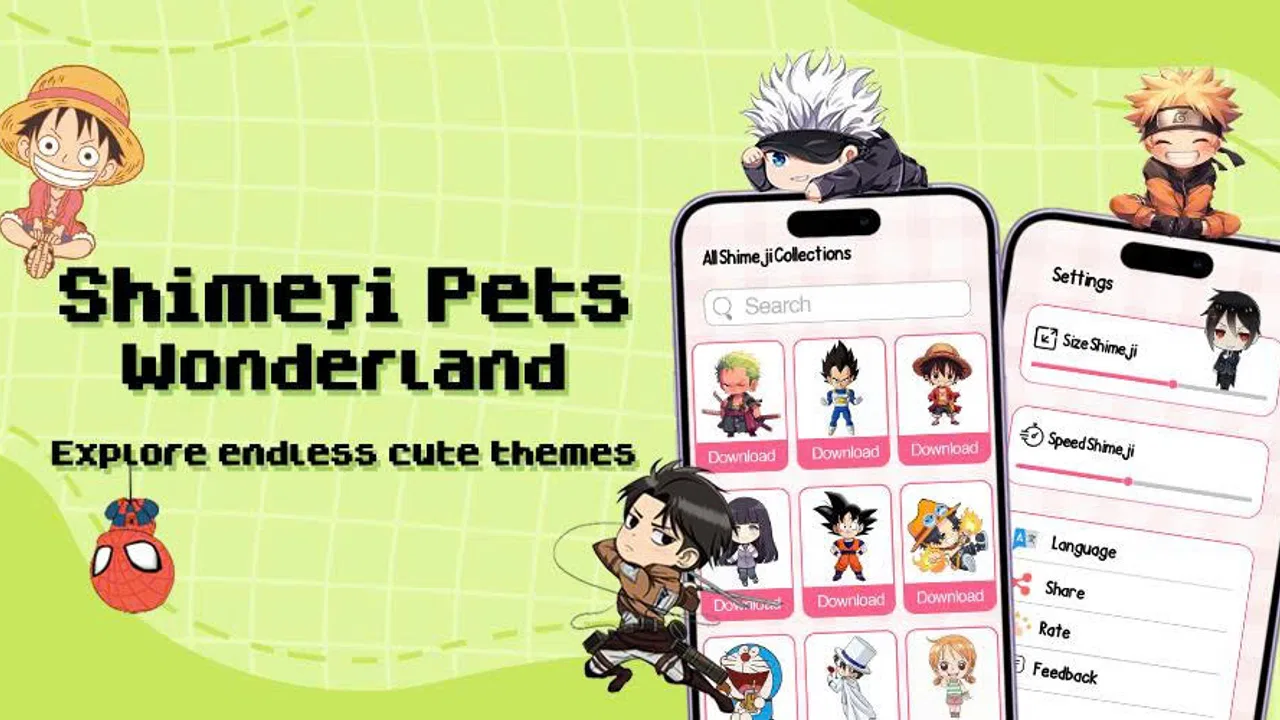
I enjoy personalization apps that change the mood of a phone without forcing me to rebuild the entire interface. Anime Shimeji Screen Pets takes that idea in a playful direction by placing cute anime-style companions over the screen, where they can move around, jump, and react while I use the device. It is less about replacing a wallpaper and more about adding a small, animated presence to ordinary phone time.
After spending time with it, I see the appeal immediately. A tiny character wandering across the display can make a familiar home screen feel more personal, especially for anime fans or anyone who likes lighthearted visual details. At the same time, this is not an essential utility. Its value depends on whether you enjoy animated screen companions enough to accept the extra visual activity and possible battery or attention cost that comes with them.
The app comes from NovaSoftLC Labs and belongs to the personalization category. It is free to install, aimed at Everyone, and has reached over 100 thousand installs. Its average score is 4.5 from roughly 4.5 thousand ratings, which suggests that the basic concept connects with a sizeable audience. I would describe it as a fun customization layer rather than a serious productivity tool, and that distinction matters before you decide whether it belongs on your phone.
You May Also Like

 Blood Strike: 2.5 Anniversary
Blood Strike’s Loadouts Turn Every Drop Into a Tactical Gamble
A close look at Blood Strike’s custom loadouts: how fast access to signature weapons reshapes its battle royale rhythm, rewards preparation, and narrows the gap between fights.

 Pandora - Music & Podcasts
Pandora’s Music Is Easy to Start, but Harder to Recover
Pandora’s strength is its low-effort path from a seed to a station. Its weak spot is how much confidence it asks you to place in connection, setup, and quiet recovery.

 8 Ball Pool
 Is Built on Rivalries, Rematches, and Routine
A close look at the rivalries, rematches, shared routines, and unanswered safety questions that turn a quick pool match into a persistent mobile community.

 Samsung Music
’s Quiet Strength Is Playing What You Already Own
Its reach comes less from spectacle than from dependable access to a personal library. That simplicity is both the app’s strongest retention engine and its ceiling.

 AccuWeather: Weather Radar
AccuWeather Review: A Quick, Clear Forecast for Everyday Decisions
For everyday plans, the best forecast is the one you can understand quickly. AccuWeather makes rain timing, radar, and local conditions easy to act on, with a few trade-offs.

 Hill Climb Racing
Why Hill Climb Racing Still Turns Crashes Into One More Run
A tiny car, a bumpy hill and one more upgrade: Hill Climb Racing keeps resurfacing because its simple chaos makes every near-miss feel personal.
More From Our News Desk



How Anime Shimeji Screen Pets Feels in Everyday Use
I look at everyday use first: whether a moving companion adds a pleasant touch while I check messages or browse, and when it becomes visual clutter. That distinction matters more than the novelty of seeing a pet move on an otherwise familiar screen. I also consider how I would decide whether this kind of personalization deserves a lasting place on my phone.
A quick visual change without replacing the whole phone
The strongest part of the experience is how little commitment the idea requires. A wallpaper changes the background, a launcher changes the structure of the home screen, and icon packs can require a fair amount of setup. A screen pet sits between those options: it gives the display some personality while leaving the rest of the phone familiar.
That makes it especially suitable for short, casual interactions. I can imagine opening my phone to check a message and noticing the character moving nearby, then returning to what I was doing without having to manage a separate game or feed. The animation is the point, but it does not need to become the entire focus of the device.
The store summary describes pets that run, jump, and interact live on the phone screen. In practical terms, that positions the app as something ambient. You are not downloading it for a story campaign, a collection of demanding challenges, or a deep customization system. You are choosing it because a small animated companion makes the screen feel more alive.
Speed expectations should stay modest
My expectation for a personalization app like this is simple responsiveness rather than game-level performance. The character should appear without an unnecessarily long wait, movement should feel reasonably natural, and the phone should remain usable while the pet is visible. That is the right standard here, because the app’s purpose is to decorate the experience rather than push the hardware.
On a suitable device, the concept should feel immediate enough for quick use: open the phone, see the companion, and continue with normal tasks. However, animated overlays are more noticeable than static wallpapers. Any delay, stutter, or interruption is easier to spot because the pet is constantly moving against the rest of the interface. That means perceived smoothness matters more than it would in a still personalization app.
I would not judge the app only by how quickly it launches. The more important question is whether the phone still feels comfortable when switching between the home screen, messaging, browsing, and other everyday activities. A screen pet that looks charming for a minute but makes the device feel busy or less responsive is not delivering the right kind of personalization.
What happens during heavier phone use
The most revealing moments are likely to come when the pet is active while the phone is already doing other work. Watching video, moving between several apps, using a browser with many open pages, or playing a demanding game places more pressure on the device than simply checking the home screen. In those situations, an animated companion may become less important than keeping the main task smooth.
For that reason, I would use the feature selectively. I like the idea of leaving a pet active while reading messages or browsing casually, but I would be more cautious during gaming, navigation, video calls, or any task where screen space and responsiveness matter. This is not a criticism of the concept; it is a sensible trade-off for any live visual layer.
A useful habit is to treat the pet as an ambient accessory rather than a permanent requirement. If the phone begins to feel crowded, I can turn the experience into something occasional instead of uninstalling immediately. That approach also helps reveal whether the app adds genuine enjoyment or merely becomes another moving element that I stop noticing after the novelty fades.
Stability and recovery in a real routine
Reliability is slightly different for this kind of app than it is for a note-taking tool. If a screen pet disappears after a restart or stops appearing when I expect it, I am not losing important work, but the personalization effect becomes inconsistent. I would therefore pay attention to how easily the companion returns after ordinary interruptions such as closing apps, restarting the phone, or switching between different parts of the interface.
My preferred experience would be one that recovers quietly. If the pet is temporarily hidden, I should be able to bring it back without repeating a long setup process. The less maintenance involved, the better the app fits its role as a small decorative feature. A screen companion should not feel like a task that needs regular troubleshooting.
There is also a practical distinction between a brief visual interruption and a serious failure. If the pet is absent for a moment, that is tolerable. If it interferes with another app, remains stuck in an awkward position, or forces me to restart the phone, the charm disappears quickly. I would judge the app by how gracefully it handles those imperfect moments, not only by its best-looking animation.
Device limits matter more than the store summary suggests
The app supports devices running Android 7.0 or newer, so it is accessible to people using older Android hardware as well as more recent phones. That broad compatibility is helpful, but it should not be confused with identical performance across every supported device. An older phone may technically run the app while offering less headroom for live animation alongside other tasks.
On a newer phone, I would expect the animated layer to feel less intrusive during ordinary use. On older or entry-level hardware, I would be more selective about leaving it active all day. The relevant issue is not just whether the app opens; it is whether the phone remains pleasant when the pet, the operating system, and other apps are all competing for attention and resources.
Screen size also affects the experience. A small display can make a moving character feel more prominent, particularly when reading or typing. A larger screen gives the pet more room to move without covering as much of the content I care about. This is one reason I would avoid judging the app from someone else’s setup: the same companion can feel charming on one phone and distracting on another.
A realistic everyday scenario
Imagine a quiet commute or a short break between tasks. I pick up my phone to answer a few messages, check a calendar item, and browse for a couple of minutes. The pet moves around the screen while I do that, adding a little personality without requiring active participation. When I open a more demanding app, I decide whether the animation still helps or whether I would rather keep the display clear.
That is where the app makes the most sense to me. It turns idle moments into something slightly more entertaining, but it does not pretend to replace the main reasons I use a phone. The companion works best when I want atmosphere, not when I need maximum focus. If I am writing, studying, navigating unfamiliar streets, or playing a fast game, a clean screen is usually more valuable.
Who will enjoy it most
Anime fans are the obvious audience, but the appeal is broader than that. Anyone who likes cute animated details, virtual companions, or playful home-screen customization may find it enjoyable. It is also a gentle option for someone who wants to personalize a phone without changing launchers, icons, or system behavior in a major way.
I would recommend trying it if you enjoy checking your phone and discovering small visual surprises. The free entry point makes experimentation easy, although optional purchases range from about five dollars to about fifty dollars per item. That range means I would explore the basic experience first and only spend money after deciding that the pets have lasting value rather than short-lived novelty.
I would skip it if you want a completely quiet interface, are sensitive to distractions, or rely on an older phone that already struggles with multitasking. It is also a poor fit for someone looking for a full anime game. The app provides animated companions on the screen; it should not be approached with expectations of deep progression, complex objectives, or a large interactive world.
How it compares with familiar personalization choices
Compared with a static anime wallpaper, this app feels more alive because the visual element moves instead of waiting passively behind icons. The trade-off is that a wallpaper is simpler, quieter, and less likely to compete with whatever I am doing. If I want a dependable background that disappears into the interface, the traditional option is better.
Compared with a launcher or icon pack, the screen-pet approach is less disruptive. I do not have to relearn where everything is or redesign the entire home screen to get a visible change. On the other hand, a launcher offers more control over layout and organization, while this app focuses on presence and animation. People who care about efficiency and structure may get more from a launcher.
Compared with a full game, the app is far more relaxed. I can enjoy it in the background instead of dedicating a session to goals and controls. That is also its limitation: anyone seeking sustained interaction may quickly want more depth than a decorative companion can provide. For me, its strength is the small scale. It adds character without demanding another daily commitment.
Small habits that improve the experience
My first tip would be to test it during normal phone use rather than judging it only while staring at the pet. The important question is whether the companion remains pleasant when I am typing, reading, or moving between apps. A screen pet that looks adorable in isolation may become distracting when it repeatedly crosses the area where I am trying to concentrate.
My second tip is to match usage to the phone’s workload. I would leave it active during light browsing and messaging, then disable or hide it before opening a demanding game or starting a video call. This creates a better balance than insisting on constant animation. It also makes any performance change easier to notice because I am comparing similar situations.
My third tip concerns purchases. Since the app is free but includes optional items priced from about five dollars to about fifty dollars, I would avoid treating every attractive addition as necessary. I would use the free experience long enough to decide whether I actually enjoy the companion after the first few sessions. Spending makes sense only if the personalization remains useful to me over time.
A fourth practical insight is to consider the pet’s relationship with important screen areas. If the character tends to occupy the part of the display where I read or tap most often, the app may feel more intrusive than it does on a mostly empty home screen. I would assess it while performing the tasks I do every day, not only while looking at a clean wallpaper.
What to expect from the current release
The current version is 1.0.6, and the app was released on January 8, 2026. That places it in an early stage of its life compared with long-established personalization platforms. I would approach it with interest but also with realistic expectations: the core idea is clear, while the overall experience may still feel more focused than mature ecosystems that have accumulated years of customization options.
That early-stage character can be positive if you want a straightforward way to try animated pets without sorting through a complicated system. It can also matter if you expect a large range of controls, extensive device-specific tuning, or a highly polished workflow from the first launch. I would decide based on whether the central experience already satisfies me, rather than assuming that future additions are guaranteed.
The age rating of Everyone makes the concept broadly approachable. Even so, the best audience is defined less by age than by taste and tolerance for motion. A family member who enjoys cute anime visuals may love it, while another person using the same phone may find live characters distracting. Personalization is subjective, so the ability to turn the effect off when focus matters is an important part of using it sensibly.
Where the app earns its place
For me, the app earns its place when I want a phone that feels friendly rather than purely functional. The pet gives the home screen a bit of movement and makes ordinary checks feel less mechanical. That effect is small, but small is exactly why it can work: I am not being asked to learn a new system or spend a long session managing a virtual character.
The strongest case is therefore emotional rather than practical. It will not make messages faster, organize files better, or improve the phone’s camera. It can, however, make the device feel more like mine. If that kind of personal touch matters to you, the free starting point is a reasonable invitation to experiment.
My performance and value verdict
I see Anime Shimeji Screen Pets as a charming personalization app with a clear audience and a deliberately lightweight purpose. Its perceived speed should be judged by how comfortably the phone remains usable around the animation, not by demanding game standards. On a capable device and during light tasks, the concept should be easy to appreciate; during heavy use or on limited hardware, a quieter setup may be the better choice.
The biggest trade-off is attention. The same movement that makes the screen feel lively can pull focus away from typing, reading, or gaming. I also would not spend on optional items until the basic experience proves that the novelty lasts. Those are not reasons to dismiss it; they are the conditions under which it makes sense.
My recommendation is to try it if you want an animated anime companion rather than a complete phone makeover. It is best for relaxed personalization, casual phone use, and people who enjoy cute visual details. If your priorities are maximum battery efficiency, distraction-free work, or advanced launcher control, a static wallpaper or a conventional customization tool will suit you better. For everyone else, Anime Shimeji Screen Pets offers an easygoing way to give an Android screen a little more character, provided you treat it as a playful accessory instead of an always-on necessity.
FAQs for Anime Shimeji Screen Pets
01What are Anime Shimeji Screen Pets?
Anime Shimeji Screen Pets are adorable and interactive characters that can roam around your smartphone or tablet screen. They are inspired by popular anime and manga themes, adding a fun and playful element to your device. Users can enjoy watching these characters perform cute animations and interact with them in various ways.
02How do I install Anime Shimeji Screen Pets on my device?
To install Anime Shimeji Screen Pets, visit the Google Play Store or Apple App Store and search for the app. Download and install it as you would with any other app. Once installed, you can choose your favorite shimeji characters and customize their behaviors and animations directly from the app settings.
03Are there in-app purchases or ads in Anime Shimeji Screen Pets?
Yes, Anime Shimeji Screen Pets may contain in-app purchases and ads. While the basic version is free, you might encounter ads or need to make purchases to unlock premium features or additional shimeji characters. These purchases enhance the user experience by providing more options and customization.
04Will Anime Shimeji Screen Pets affect my device's performance?
Anime Shimeji Screen Pets are designed to be lightweight, but they do run continuously in the background. This may slightly impact battery life and performance, especially on older devices. It's recommended to monitor your device's performance and adjust settings if you notice any significant slowdown.
05Can I use Anime Shimeji Screen Pets offline?
Anime Shimeji Screen Pets can be used offline once downloaded, as they do not require an internet connection to function. However, an internet connection may be needed for certain features, like downloading new characters or updates, and viewing ads if you're using the free version.
Pros
- Interactive and engaging screen pets.
- Wide variety of adorable characters.
- Minimal impact on device performance.
- Customizable character actions.
- Regular updates with new content.
Cons
- Limited functionality beyond decoration.
- Can be distracting during work.
- Some characters require in-app purchases.
- May not appeal to non-anime fans.
- Notifications can occasionally be intrusive.

Anime Shimeji Screen Pets
Gallery